GLP-1 medications, read straight from the trials.
Semaglutide, tirzepatide, and the incretin pipeline. Efficacy magnitudes, cardiovascular outcomes, side-effect timelines, access, and cost — every figure tied to its source trial or FDA label.
The drugs
Evidence monographs on each GLP-1 and dual/triple agonist — what the pivotal trials actually showed.
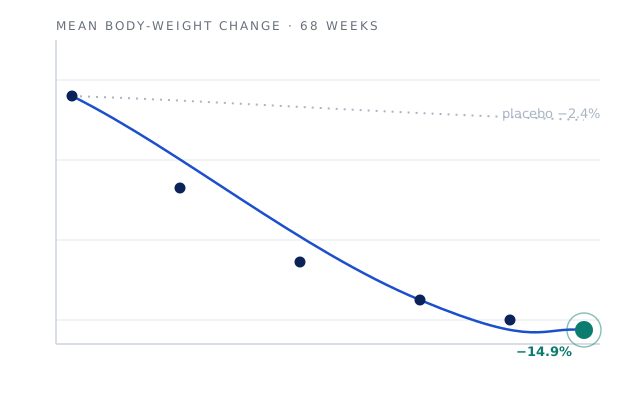
What the semaglutide weight-loss trials actually showed
STEP 1, STEP 4, and SELECT — the efficacy, the rebound, and the cardiovascular signal, read straight from the primary literature.
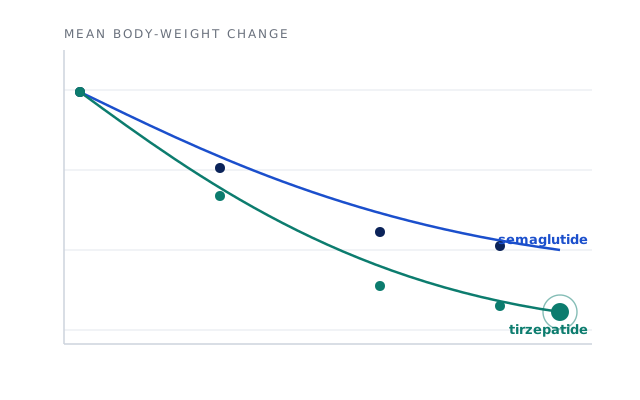
Tirzepatide vs semaglutide for weight loss: what the trials actually support
Most comparisons are cross-trial. Only SURPASS-2 and SURMOUNT-5 randomized one drug against the other — here's the precise distinction.
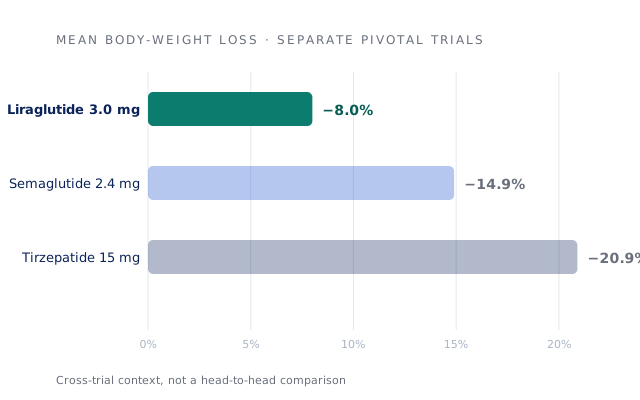
Liraglutide (Saxenda, Victoza): the first-gen daily GLP-1, read from the trials
About 8% weight loss in SCALE, a real cardiovascular benefit in LEADER, and a daily needle — the honest baseline that weekly semaglutide and tirzepatide now eclipse.
Dulaglutide (Trulicity): a diabetes drug with a modest weight effect
Trulicity is an FDA-approved type-2 diabetes GLP-1 with solid A1c reduction and a proven cardiovascular benefit (REWIND) — but its weight effect is only a few kilograms, which is why weight-loss seekers are steered to Wegovy or Zepbound.
Exenatide (Byetta, Bydureon): the first GLP-1, read from the trials
Born from Gila monster venom and approved in 2005, exenatide opened the GLP-1 class — a real type 2 diabetes drug with a modest weight effect, now eclipsed by semaglutide and tirzepatide.
Oral semaglutide (Rybelsus): what the PIONEER trials actually showed
A GLP-1 peptide in a pill is hard to pull off. PIONEER 1, 4, and 6 plus OASIS 1 — read straight from the primary literature.
The Wegovy pill (oral semaglutide 25 mg): what OASIS 4 actually showed
The first oral GLP-1 approved for weight loss — and why the −16.6% everyone quotes is not the trial's primary result.
Orforglipron: the oral non-peptide GLP-1, and what the trials actually show
A once-daily small-molecule GLP-1 pill with no food restrictions — from Phase 2 proof of concept to the Phase 3 read-outs. The evidence, graded.
Retatrutide: the triple agonist and what its Phase 2 data actually show
A single peptide hitting GIP, GLP-1 and glucagon produced the largest weight-loss numbers yet reported — in Phase 2. A straight read of the evidence and its limits.
CagriSema: what the REDEFINE program actually showed
Amylin (cagrilintide) plus GLP-1 (semaglutide) in one weekly shot. REDEFINE 1 and 2 delivered large weight loss (20.4% and 13.7%) and a more nuanced story than the hype. A straight read.
Cagrilintide: what it is, results, and when it could be approved
The amylin analog behind CagriSema, on its own terms: a long-acting amylin analog, not a GLP-1, that produced dose-dependent weight loss as a standalone weekly injection in Phase 2. The evidence, and where it sits.
Cagrilintide dosage: what the trials used, and why there's no approved dose
Cagrilintide is investigational — no FDA-approved standalone, so no sanctioned dose. The Phase 2 trial studied 0.3–4.5 mg once weekly, titrated slowly for tolerability and given under supervision. A straight read of trial dosing vs. self-dosing.
Cagrilintide side effects: a gastrointestinal, titration-shaped profile
Amylin slows gastric emptying, so cagrilintide's side effects are mostly in the gut — nausea, vomiting, constipation, diarrhea — dose-related and usually transient. What the trials actually report.
Survodutide (BI 456906): the GLP-1 / glucagon dual agonist and its Phase 2 and Phase 3 data
An investigational dual agonist that adds glucagon to GLP-1 — with Phase 2 signals now confirmed in published Phase 3 trials: about 16.6% weight loss and strong liver-fat results. A straight read of the evidence and its limits.
The next wave of obesity drugs: eloralintide, petrelintide, MariTide and VK2735
Four pipeline molecules routinely lumped together as "the amylin pipeline" — but only two are amylin drugs, and the other two push the GIP receptor in opposite directions. A straight read of the published trials.
Mazdutide: the GLP-1/glucagon dual agonist approved in China
A once-weekly GLP-1 and glucagon dual agonist from Innovent, licensed from Eli Lilly. What the GLORY-1 Phase 3 data show — and exactly where it is and isn't approved.
Amycretin: what the early GLP-1 + amylin co-agonist data actually show
Novo Nordisk's unimolecular GLP-1 and amylin agonist posted large weight-loss numbers in Phase 1 — subcutaneous and oral. A straight read of the evidence, and how early it really is.
Pemvidutide: the GLP-1/glucagon dual agonist betting on lean-mass preservation
Altimmune's investigational dual agonist isn't chasing the biggest weight-loss number — it's chasing better body composition and liver benefit. A straight read of the Phase 2 evidence.
Retatrutide dosage: the doses studied, and why there is no approved one
Retatrutide is investigational and not approved anywhere, so there is no official dose. What can be described is how it was dosed in the Phase 2 trials (once weekly, escalated slowly up to 12 mg), its half-life, and why.
Oral tirzepatide: the honest status of a pill that does not exist yet
There is no FDA-approved oral tirzepatide. Here is why an oral peptide is hard, what the 'oral tirzepatide' sold online really is, and the oral incretins that actually exist.
Ecnoglutide (XW003): the cAMP-biased GLP-1 agonist now approved in China
A once-weekly GLP-1 receptor agonist engineered to bias signaling toward cAMP — approved by China's NMPA for diabetes and weight management in 2026, with about 13% weight loss in Chinese phase 3 trials, but still unapproved in the US or EU. A straight read of the evidence and its limits.
Orforglipron dosage: the doses studied, and what the label actually covers
Orforglipron is a once-daily oral non-peptide GLP-1 — now FDA-approved for weight management. What can be described precisely is how it was dosed in the Phase 2/3 trials: once daily, no food or water rules, titrated up to 36 mg — and why.
Compounded tirzepatide dosage chart: mg to units, 2.5 to 15 mg
The Zepbound titration schedule from the FDA label, converted to syringe units at 5, 10 and 20 mg/mL, with the reverse chart for 25, 50 and 75 units and the dosing errors FDA has documented.
Drug-vs-drug comparisons
Head-to-head verdicts, settled by direct trials wherever they exist.
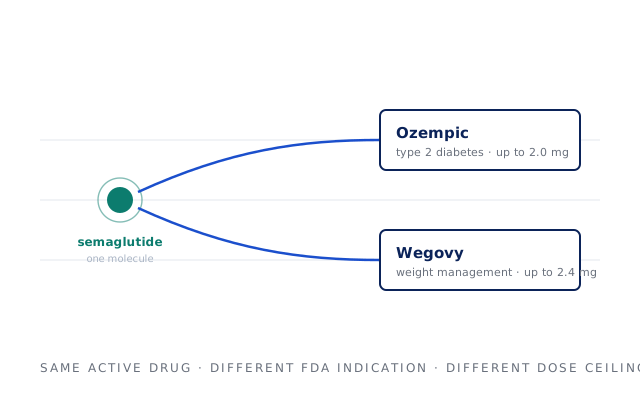
Ozempic vs Wegovy: same drug, two labels, two dose ceilings
Ozempic and Wegovy are both semaglutide from the same maker — but approved for different uses at different max doses. An honest, evidence-first explainer.
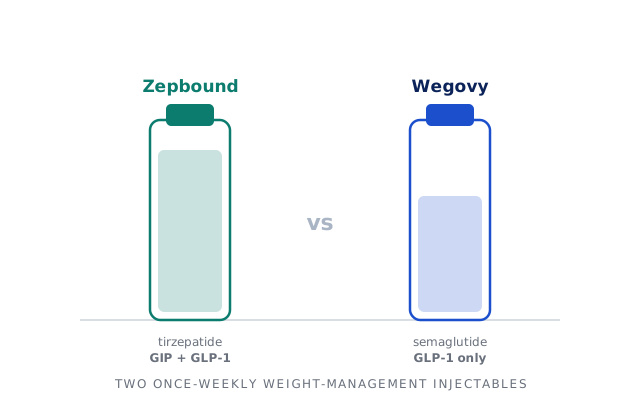
Zepbound vs Wegovy: what the trials actually show
Zepbound (tirzepatide) leads on weight loss in the one head-to-head trial; Wegovy (semaglutide) has the cardiovascular-outcomes approval. An honest comparison.
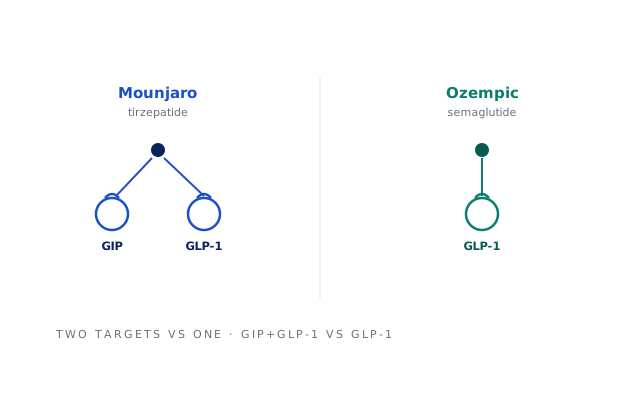
Mounjaro vs Ozempic: what the head-to-head trial actually found
In SURPASS-2, a direct randomized trial, Mounjaro (tirzepatide) beat Ozempic (semaglutide) on both blood sugar and weight, likely because it hits two gut-hormone receptors instead of one.
Trulicity vs Ozempic: the head-to-head trial result
Both are once-weekly GLP-1 injections for diabetes. In SUSTAIN-7, semaglutide (Ozempic) beat dulaglutide (Trulicity) on both blood sugar and weight at matched doses — about 6.5 kg vs 3.0 kg.
Wegovy vs Saxenda: the head-to-head wasn't close
Both are weight-loss GLP-1 injections, but in STEP 8 the newer once-weekly Wegovy produced ~15.8% weight loss versus ~6.4% for the daily Saxenda — and was more convenient too.
Rybelsus vs Ozempic: same drug, pill versus injection
Rybelsus and Ozempic are both semaglutide — one a daily pill, one a weekly injection. The injection reaches higher potency; the pill is needle-free but comes with strict empty-stomach dosing rules.
Retatrutide vs tirzepatide: what the evidence actually shows
Retatrutide's ~24.2% Phase 2 weight loss edges tirzepatide's ~20.9% — but they're separate trials, there's no head-to-head, and one drug isn't even approved.
Mounjaro vs Zepbound: the same drug under two names
Both are tirzepatide: identical molecule, identical 2.5 to 15 mg doses, identical ~20.9% weight loss. Mounjaro is the diabetes brand, Zepbound the obesity brand; diagnosis and insurance decide which you get.
Metformin vs Ozempic: different drugs, often used together
Not really rivals: metformin is the cheap, oral foundation; Ozempic (semaglutide) is a more potent injectable that adds greater glucose-lowering and real weight loss.
Contrave vs Wegovy: the weight-loss gap is large
Both are approved weight-loss drugs, but Wegovy produced about 14.9% weight loss versus about 6.1% for Contrave, roughly 2.5 times more. Wegovy now also comes as a daily pill.
Retatrutide vs tirzepatide vs semaglutide: the three-way, read honestly
One, two, three receptors — and roughly 15%, 21% and 24% weight loss. The mechanism ladder is real, but two drugs are approved and one is still investigational, and none were compared in the same trial.
Semaglutide vs liraglutide: what the head-to-head trials actually show
Two Novo GLP-1 drugs — daily liraglutide and weekly semaglutide. STEP 8 and SUSTAIN 10 compared them directly; here is the honest read on potency, dosing and where each still fits.
Cost & access
What these drugs really cost, how to get them, and the compounding landscape.
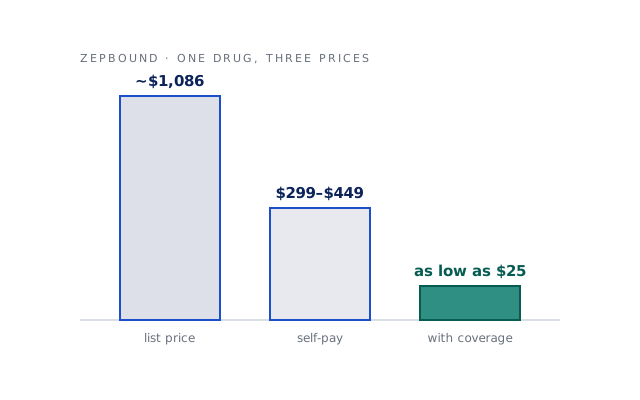
Zepbound cost in 2026: list price, self-pay, and the $25 copay
The ~$1,086 list price is one almost no one pays. Self-pay vials and KwikPens run $299–$449 by dose; with covered insurance the savings card drops the copay to as little as $25.
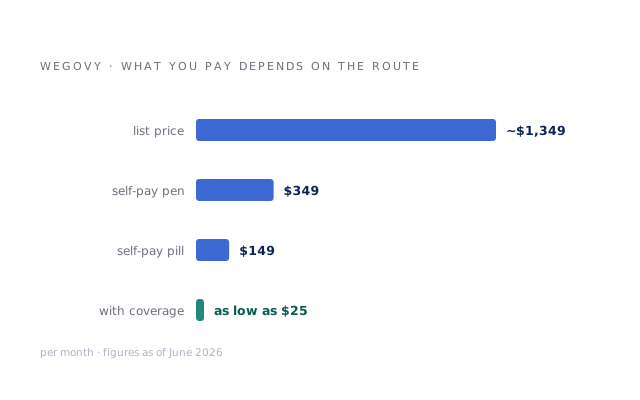
Wegovy cost in 2026: list price, self-pay, and the $25 copay
The ~$1,349 list price is one most people don't pay. Self-pay is $199/month for two months then $349 on the pen, $149–$299 for the pill, and as low as $25 with covered insurance.
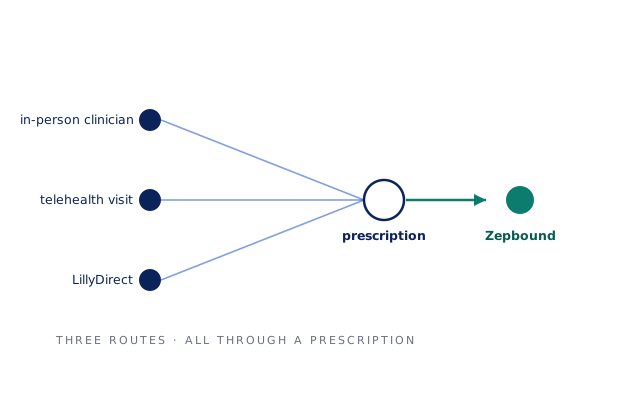
How to get Zepbound: the three routes to a prescription
Zepbound is prescription-only. Here's who qualifies, and the three legitimate routes (your clinician, telehealth, or LillyDirect), plus why there's no legal no-prescription shortcut.
How to get Wegovy in 2026: the four legitimate routes
Wegovy is the semaglutide approved for weight management, so you don't need diabetes; you need a BMI of 30+ (or 27+ with a comorbidity) and a route. Here are the four: your doctor plus insurance, NovoCare self-pay, telehealth, and the compounding question.
How to get Ozempic in 2026: the honest pathway
Ozempic is a diabetes drug, so how you get it depends on why you want it. For diabetes it's on-label and often covered; for weight loss it's off-label and usually points to Wegovy. Here's the real route, and the real cost.
How to get Mounjaro in 2026: the honest pathway
Mounjaro is a diabetes drug; the same molecule for weight loss is Zepbound. For diabetes it's on-label and often covered; for weight loss, Zepbound is the route. Here's the real pathway, the $1,112 list price and the $499 self-pay price.
GLP-1 cost and insurance coverage: what drives the price, and what's actually covered
List price, net price, and your price are three different numbers. Indication drives coverage, savings cards have fine print, and cost is itself a clinical variable.
Compounded vs branded GLP-1: regulatory status, sourcing and the evidence
Compounded GLP-1 isn't FDA-approved, the shortage exception behind it ended in 2025, the FDA moved against mass-marketed copies in 2026, and the trial data belong to the branded product. Here's the precise picture.
Where to buy retatrutide: the honest answer is you can’t
Retatrutide is investigational and not approved anywhere, with an FDA filing planned for early 2027 — so there is no legitimate place to buy it. The only lawful access is a clinical trial. Here is the sober reality of the gray market, and the approved alternatives available now.
The cheapest legitimate ways to get tirzepatide in 2026
LillyDirect self-pay Zepbound runs $299–$449 by dose; a covered plan plus the savings card can mean ~$25. Compounded tirzepatide is cheaper, and not FDA-approved. An honest map of the tradeoff.
Retatrutide cost: why there is no price yet, and what a real GLP-1 costs
Retatrutide is investigational and not FDA-approved, so it has no legitimate price. The only lawful access is a free clinical trial. Here is the honest economics — and approximate figures for the approved GLP-1 drugs you can actually buy today.
Tirzepatide cost in 2026: Zepbound, Mounjaro, and compounded, compared
One molecule, three price routes. Zepbound self-pay runs $299–$449, Mounjaro lists at $1,112, and compounded tirzepatide is advertised at ~$149–$399. An honest side-by-side across every form.
Where to buy tirzepatide: the legitimate channels, and the red flags
Tirzepatide is an FDA-approved prescription drug — so there are safe, legal ways to get it. Here are the real channels (LillyDirect self-pay vials and KwikPen, a pharmacy with a prescription, licensed telehealth), why routine compounding is now restricted, and how to spot a gray-market seller.
Effects & timeline
What to expect over time — results, side effects, and the questions everyone searches.
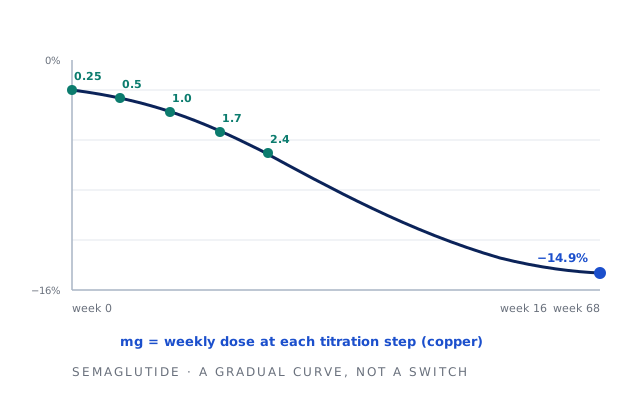
Semaglutide results timeline: how long Wegovy really takes to work
Weight loss on semaglutide is gradual and tied to a slow dose ramp. The pivotal trial reported ~14.9% — at 68 weeks. Here is the honest, trial-grounded trajectory.
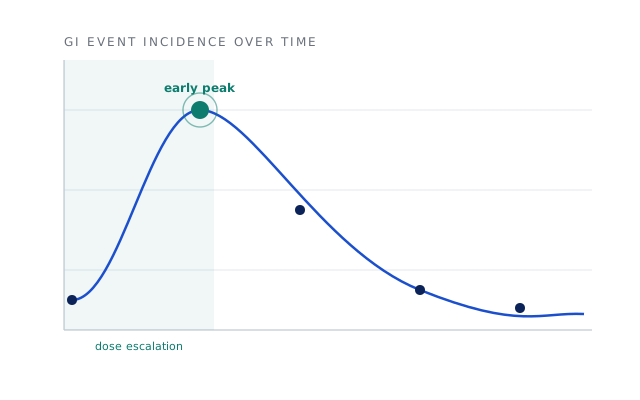
GLP-1 gastrointestinal side effects: incidence and timeline from the trials
Nausea, vomiting, diarrhea and constipation: how common they are on GLP-1 drugs (nausea 44% vs 16% on placebo for Wegovy) and when they happen, read from the pivotal trials and labels.
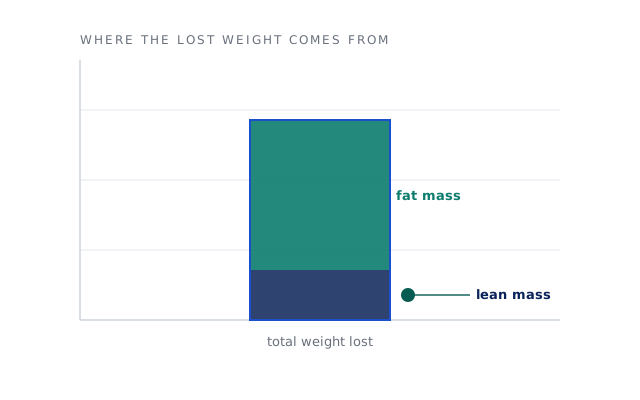
GLP-1 medications and muscle: what the body-composition data actually show
Some of the weight lost on GLP-1 drugs is lean mass (about 25% in the tirzepatide scan substudy), but fat falls faster, and resistance training plus protein is what protects muscle.
GLP-1 and hair loss: is it the drug, or the weight loss?
Hair shedding on Wegovy and Zepbound affects about 3% to 5% of adults (1% on placebo). It is usually telogen effluvium, a temporary, diffuse thinning linked to rapid weight loss that typically regrows.
Alcohol and Ozempic: does a GLP-1 really make you drink less?
The 'I stopped wanting to drink' reports now have a randomized trial behind them. In 48 adults, semaglutide cut how heavily people drank and their craving, more than whether they drank at all. It's promising and off-label.
'Ozempic face': what it is, and what it isn't
The gaunt, hollowed look on GLP-1 drugs is facial fat-pad loss from rapid weight reduction — not a drug-specific skin effect. The evidence is reviews and case series, and it's managed like any volume loss.
Contrave side effects: nausea, the serious warnings, and the honest safety picture
Nausea is Contrave's most common side effect — but the parts that matter most are the bupropion-driven neuropsychiatric/suicidality warning and the seizure contraindication. Read straight from the label and the COR trials, against modest ~5–9% efficacy.
Ozempic, the Vulva and Vagina: What's Real and What's Hype
“Ozempic vagina” and “Ozempic vulva” are media terms, not drug effects — the real story is rapid-weight-loss volume loss and life stage, not an action on genital tissue.
'Ozempic Babies': GLP-1s, Fertility, and Birth Control
Unexpected pregnancies on GLP-1 drugs come from two real mechanisms: weight loss restoring ovulation, and (for tirzepatide specifically) reduced absorption of oral contraceptives. Here's what the evidence and the labels actually say.
Ozempic, Libido, and Erectile Dysfunction: What the Evidence Shows
GLP-1 drugs don't act on sex drive directly — they act on weight, and that cuts both ways: an evidenced upside for testosterone and erections, a real but under-studied libido downside, and why desire and erections are different problems.
Zepbound (tirzepatide) side effects: the label-anchored rundown
Nausea leads the common reactions, but the label also carries a boxed thyroid-tumor warning and serious risks. What the FDA prescribing information and SURMOUNT-1 actually say.
Zepbound for sleep apnea: the first drug approved for OSA, and what the trials show
In December 2024 the FDA approved Zepbound (tirzepatide) for moderate-to-severe obstructive sleep apnea in adults with obesity. A straight read of the SURMOUNT-OSA evidence and its limits.
Ozempic and gallbladder problems: what the evidence really shows
GLP-1 drugs raise the risk of gallstones and gallbladder inflammation — a real, dose-related signal from randomized trials. The mechanisms, the modest absolute risk, and the symptoms that mean seek care now.
“Microdosing” GLP-1 drugs: a trend, not a protocol. What the evidence says
Sub-therapeutic semaglutide and tirzepatide is spreading fast. The pharmacology is clear, the honest part is clearer: efficacy is dose-related, and no trial has tested intentional microdosing.
Semaglutide and GLP-1s for PCOS: what the evidence actually shows
PCOS runs on insulin resistance and weight — exactly what GLP-1s improve. A straight read of the RCTs and meta-analyses, the off-label reality, and the fertility caveat.
Semaglutide for MASH: what the ESSENCE trial and the FDA approval actually say
Semaglutide 2.4 mg hit both liver endpoints in Phase 3 and won an FDA approval for MASH in 2025 — but for a specific F2–F3 population, under the accelerated pathway. A precise read of the evidence.
Retatrutide side effects: what the Phase 2 trials actually reported
Dose-related gastrointestinal events dominate, with a transient glucagon-linked rise in heart rate — all from Phase 2. No long-term safety data, no approved product, and gray-market risk on top.
GLP-1 supplements and patches: do any work like the real drugs?
No supplement contains a GLP-1 drug. Berberine, Akkermansia, fiber and 'GLP-1 patches' graded against their human trials, and compared on one scale with semaglutide and tirzepatide.
Lipo-B12 and MIC injections: what's in them, and do they work?
MIC shots combine methionine, inositol and choline, usually with B12, and are sold as fat burners. What each ingredient does, why no trial supports the weight-loss claim, and who actually benefits from B12.
Muscle preservation on GLP-1
Lean mass falls alongside fat on a GLP-1, and two very different drugs are being tested to stop it — with the same awkward result so far: more muscle, no better function.
GLP-1 medications and muscle: what the body-composition data actually show
Some of the weight lost on GLP-1 drugs is lean mass (about 25% in the tirzepatide scan substudy), but fat falls faster, and resistance training plus protein is what protects muscle.
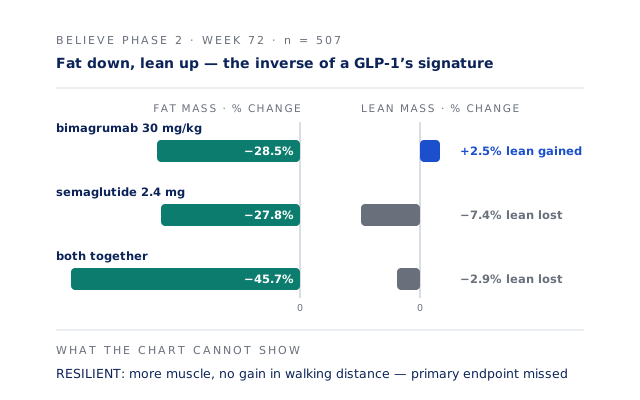
Bimagrumab: the fat-loss antibody that failed its pivotal trial
An anti-ActRII monoclonal antibody — not a peptide, not for sale — that reliably strips fat and adds lean mass, has never improved physical function in a randomized trial, and is now in phase 2 alongside GLP-1 drugs.
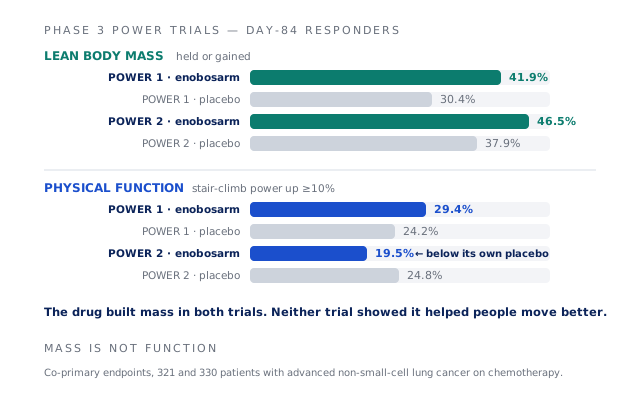
Ostarine (enobosarm): the clinical drug behind the black-market compound
Ostarine is enobosarm — a real SARM with two completed phase 3 trials. They found the same thing twice: lean body mass went up, physical function did not. That dissociation, not the bodybuilding folklore, is what you need to know.
Landmark trials
The pivotal trials behind the GLP-1 era — read straight from the primary sources, limitations and all.
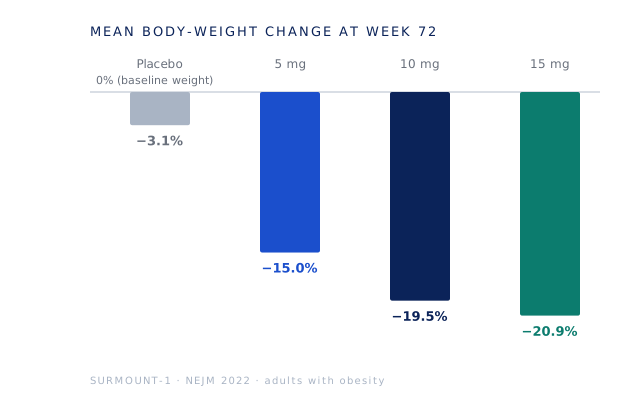
SURMOUNT-1 explained: the trial that made tirzepatide the benchmark
The landmark phase 3 trial of tirzepatide for obesity — the design, the up-to-20.9% weight loss, the safety profile, and the limits of what it proved.
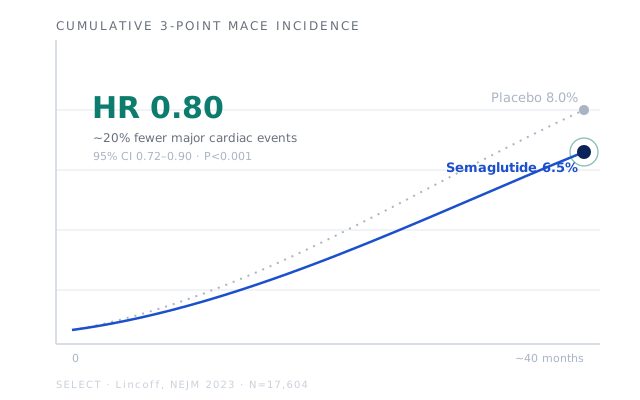
The SELECT trial, explained: semaglutide and heart outcomes without diabetes
How a 17,604-person trial showed semaglutide 2.4 mg cut major cardiovascular events by about 20% — and what the modest absolute benefit really means.
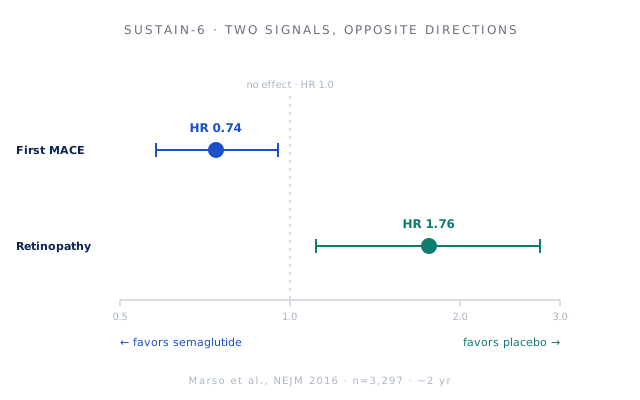
SUSTAIN-6 explained: the trial that first hinted at semaglutide's heart benefit
A safety study designed to rule out cardiovascular harm instead signaled benefit (MACE HR 0.74) — while flagging a real diabetic-retinopathy caveat. Read straight from the primary source.
STEP-HFpEF, explained: can semaglutide treat obesity-related heart failure?
The trial that tested whether semaglutide improves symptoms and function — not just weight — in obesity-phenotype HFpEF, read straight from the primary source.
Obesity drugs that aren't GLP-1s
Approved drugs that treat obesity or body composition through a completely different pathway than incretin signaling — narrower populations, different mechanisms, worth knowing the contrast.
More in GLP-1
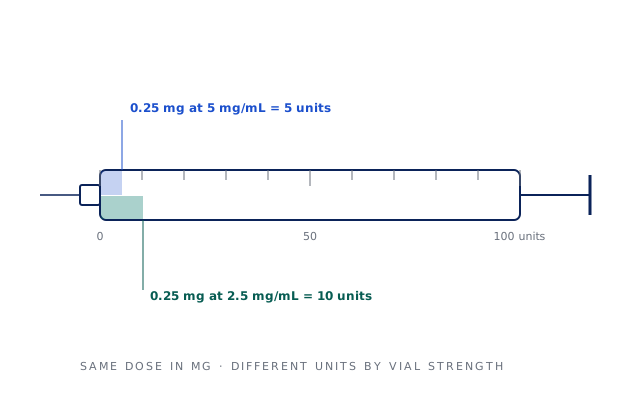
Compounded semaglutide dosage chart: mg to units by vial strength
The Wegovy titration schedule, converted to mL and syringe units at 1, 2.5 and 5 mg/mL, with the FDA label's rules for missed doses and maintenance. Your prescriber and pharmacy set the actual dose.
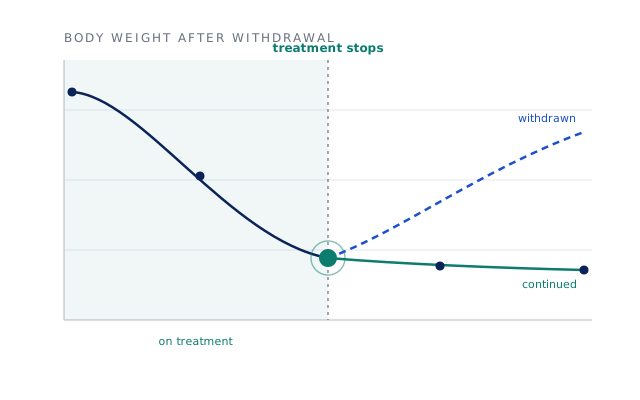
Stopping a GLP-1: what the withdrawal trials actually show
Three randomized withdrawal trials tested exactly this — and a 7,938-patient real-world cohort tells a flatter story. What happens to weight, and to blood pressure, after the last injection.
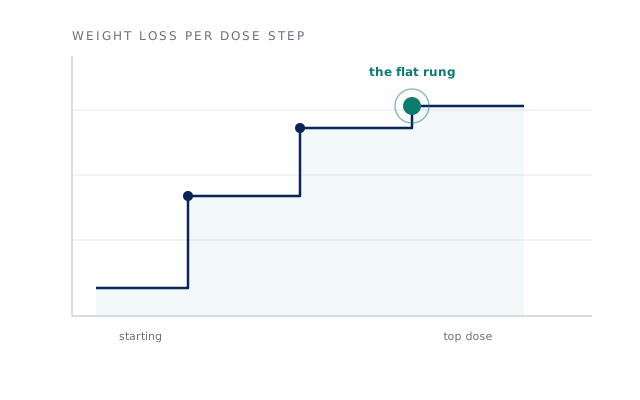
GLP-1 maintenance dose: what the labels allow and what each step up actually buys
More than one maintenance dose is approved for both Wegovy and Zepbound, and the dose-arm trials show the top rung adds far less than most people assume.
Constipation on a GLP-1: how common it is and what the evidence supports
One in four on semaglutide 2.4 mg and, unexpectedly, less common at higher tirzepatide doses. What the label tables report, and what randomized trials say actually relieves it.
Traveling with a GLP-1: storage limits and dose timing from the labels
21 days, 28 days or 56 — the room-temperature allowance depends on which product you hold, and the rule for moving your injection day is 48 hours for semaglutide but 72 for tirzepatide.
GLP-1 pill vs injection: what you trade for swallowing it
Oral semaglutide 50 mg matched the injection to within 0.2 of a percentage point, but not at the approved dose, and the daily fasting protocol is the cost nobody mentions.
503A vs 503B compounding pharmacies: what the difference actually buys you
Both make drugs the FDA has never approved. Only one must meet CGMP, gets inspected on a schedule, and appears in a public table with its inspection outcomes.
The GLP-1 weight-loss plateau: why it happens and when it is real
A plateau is where the drug's persistent effect and a rising appetite-feedback force balance out. The modeling explains why GLP-1s reach it late, and the trial curves were still falling at week 88.
How to inject Ozempic and semaglutide: a step-by-step guide
A plain, label-grounded walkthrough of injecting once-weekly semaglutide (sites, pen handling, timing, missed doses, storage and sharps disposal), with the Ozempic and Wegovy differences that actually matter.
How to manage GLP-1 side effects: nausea, constipation and more
Nausea, constipation, burping: most GLP-1 side effects come from slowed gastric emptying, flare after each dose step-up, and settle over time. A plain, label-grounded management guide.
What to eat on Ozempic and GLP-1s: a practical diet guide
There is no official Ozempic diet — but protein first, fiber and fluids, smaller portions, and easing off greasy, sugary, and fizzy foods make GLP-1s far easier to live with.