Therapeutic peptides, separated from the marketing.
BPC-157, TB-500, GHK-Cu, sermorelin, ipamorelin, and the broader peptide landscape — where the human evidence is real, where it is preclinical, and where it simply isn't there yet.
Peptide basics & legality
Start here — what peptides are, their legal status, and the rules athletes and buyers actually run into.
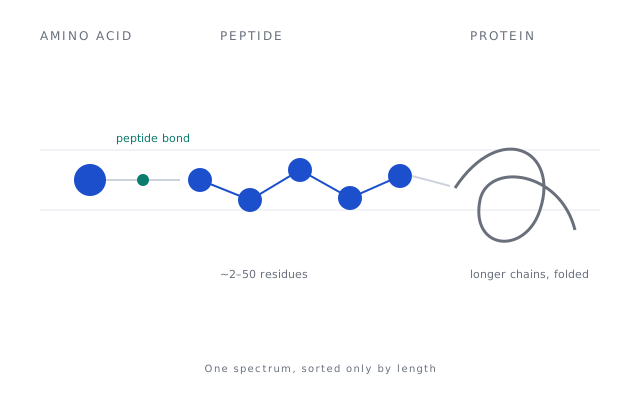
What are peptides? A list of peptides and what they do
A short chain of amino acids. Where any given peptide falls between approved medicine and unproven research chemical is the whole story, so here are 30 of them, graded.
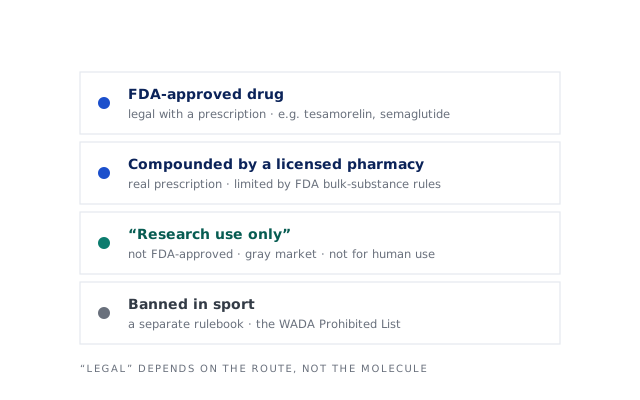
Are Peptides Legal? US Status, the FDA, and 'Research-Only' Rules
Some peptides are FDA-approved prescription drugs; most popular research peptides are not — and 'research use only' is a legal framing, not a free pass. A careful, non-alarmist map of US status.
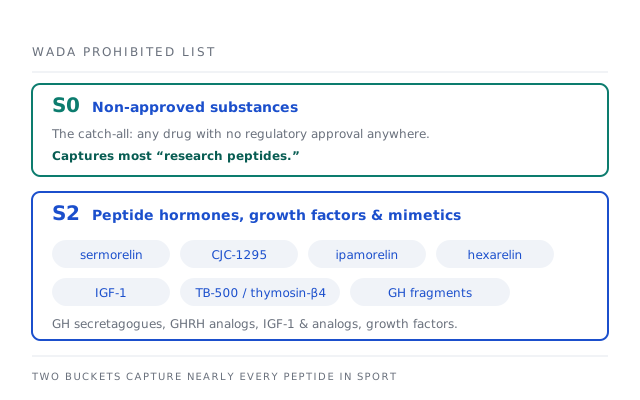
Banned Peptides: The WADA Prohibited List, Explained
Why nearly every peptide is banned in sport — how WADA's S0 catch-all and S2 peptide-hormone category work, where BPC-157 stands, and how banned differs from illegal.
Do Peptides Show Up on a Drug Test?
Standard employment and clinical drug screens do not test for peptides — but elite-sport anti-doping labs specifically do. The honest answer depends on who is testing, and why.
Are peptides safe? It depends on which peptide — and which vial
Approved peptide drugs have known, bounded safety profiles from human trials. Gray-market “research” peptides carry a different risk: unverified purity, contamination, non-sterile injection and no oversight. An honest split of the two questions.
Healing & recovery
The injury-and-repair peptides — where the human evidence is thin and the marketing is loud.
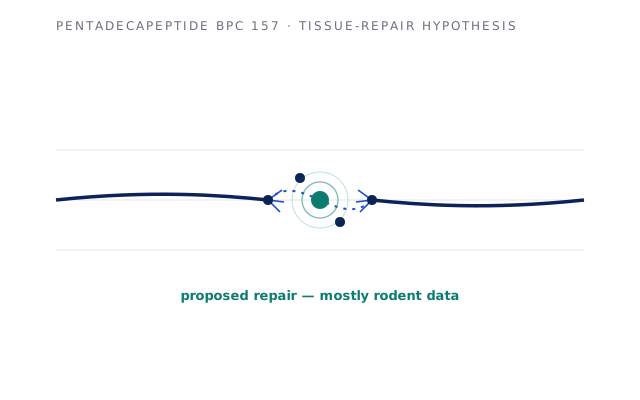
BPC 157: what the evidence actually shows (and what it doesn't)
The 'healing peptide' has a deep rodent literature and almost no human data. A straight read of where the science stands.
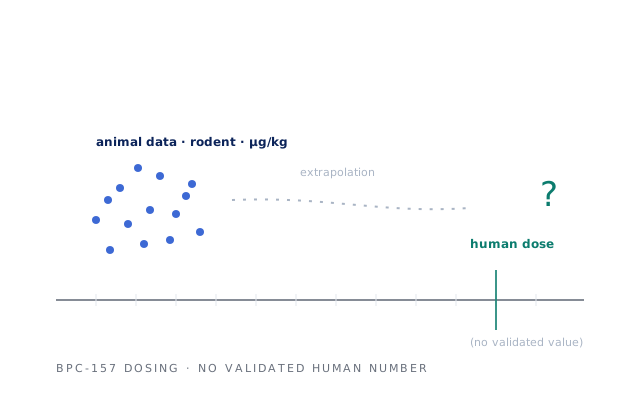
BPC-157 dosage and safety: why there is no validated human dose
The honest answer to a heavily-searched query: no established human dose, no dose-ranging trial, no approval, and no long-term safety data. Here is why.
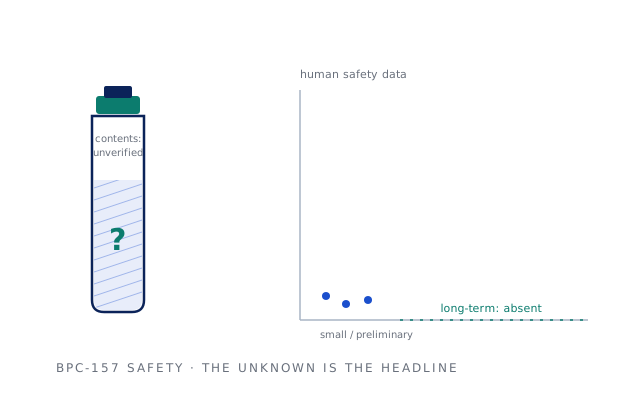
BPC-157 side effects and safety: what the thin human evidence actually shows
BPC-157 isn't FDA-approved and the human safety data are thin. The biggest real-world risk is unregulated, unverified-purity vials, and the missing long-term data is the headline.
BPC-157 before and after: what the evidence really shows about results
Searchers want proof of recovery transformations. The truth: BPC-157's results are almost entirely animal data plus anecdote, and no controlled human before-and-after trials exist yet.
TB-500 and thymosin beta-4: separating the trials from the hype
Real Phase 2 dry-eye data, deep preclinical neuro/cardiac work, and a recovery-market use that was never actually tested.
KPV peptide: what the evidence actually shows (benefits, dosage talk, and side effects)
KPV is the anti-inflammatory tripeptide tail of α-MSH, sold for gut, inflammation, wound-healing and skin. The mechanism is real and the mouse data are real — but there are essentially no human trials. A straight read of where the science stands.
Thymosin alpha-1 peptide: benefits, evidence and how it's used
A real immune drug abroad, read against the wellness pitch. Tα1 (brand Zadaxin) is an approved immunomodulator in dozens of countries — for hepatitis, sepsis and severe infection, supervised. It is not FDA-approved, not the same as TB-500, and not the general anti-aging injectable sold online. The honest evidence, dosing and side-effect read.
VIP (vasoactive intestinal peptide): real biology, mixed trials, unproven nasal use
VIP is a genuine endogenous neuropeptide, and synthetic VIP (aviptadil) was tested properly in serious lung disease — with mixed, largely unconfirmed results. The compounded nasal-VIP "mold / CIRS" protocol has essentially no controlled evidence. The honest read.
TB-500 dosage: why there isn't an approved one
There is no FDA-approved TB-500 and no official human dose. The real thymosin β4 trials used eye drops and wound gels, not recovery injections; the community protocol is anecdotal — and the peptide is banned in sport.
TB-500 side effects: why “none reported” means “none studied”
Injectable TB-500 has no human safety data — so its side-effect profile is largely unknown, and the most credible concern is a theoretical cancer-biology risk built into the molecule's own mechanism.
KPV dosage: why there is no established human dose
KPV's evidence is preclinical — mouse colitis and cell models, with no human trials. That means no validated dose, no proven route, and no safety profile. A straight read of what the numbers are, what they aren't, and why the circulating ranges are unvalidated self-experimentation.
KPV side effects: why “no reported side effects” isn’t reassurance
KPV has no human safety data — its whole profile comes from cells and animal models. Those studies didn’t flag toxicity at the doses tested, and KPV shouldn’t tan skin like melanotan, but neither makes it proven safe. A straight read of what’s known and what isn’t.
Thymosin alpha-1 dosage: the 1.6 mg twice-weekly trial regimen, in context
The dose carried through thymosin α1's approved and trial use is consistent: 1.6 mg subcutaneously, twice weekly. But that's a supervised clinical regimen from sick patients — not a US-approved prescription, and not a validated wellness dose for healthy adults.
Thymosin alpha-1 side effects: real trial data, read against the online vial
Because Tα1 (brand Zadaxin) is an approved drug abroad, it has genuine trial-grade safety data — it reads as well tolerated, with injection-site reactions the main effect. The honest cautions are mechanistic (autoimmune flare, immunosuppression), and none of it describes the unregulated US peptide vial.
BPC-157 vs TB-500: the recovery peptide pair, graded on evidence
They're sold as a matched 'healing stack,' but BPC-157 and TB-500 are unrelated molecules with different mechanisms and the same honest ceiling: overwhelmingly preclinical for recovery, with no human randomized trials.
Wolverine stack (BPC-157 + TB-500): what's in it and is it proven?
Popular, but proven? The combined BPC-157 + TB-500 recovery blend has a tidy mechanistic story and zero combination trials. A straight read of what the blend is, the theory, the FDA status, and the gaps.
How to Heal Tendons Faster: What the Evidence Supports
Loading beats injections beats peptides: a straight, evidence-ranked guide to what actually helps a tendon recover — and what is just hype.
ARA-290 (cibinetide): the EPO-derived repair peptide and what its trials actually show
An 11-amino-acid peptide engineered from erythropoietin to protect tissue without making red cells. A straight read of the small-fiber-neuropathy evidence — and its limits.
Peptides for joint pain: what the human evidence actually shows
BPC-157, TB-500 and copper peptides are marketed for cartilage, tendon and ligament repair. Graded by real human evidence, the joint-pain ladder is nearly empty at the top.
Larazotide: the leaky-gut peptide that failed its Phase 3 trial
An 8-amino-acid tight-junction regulator with real celiac data and a failed pivotal trial — and why the supplement use runs far ahead of the evidence.
Thymalin: the honest evidence behind the thymus-peptide immunity and longevity claims
Marketed for immune restoration and longer life. The supporting science is old, small, and almost entirely from one Russian program — and unreplicated.
LL-37: a real immune peptide, no human proof, and two edges
The human cathelicidin is genuine innate-immunity biology — but its therapeutic use is preclinical, and the same peptide is implicated in inflammatory disease.
Pentadeca Arginate (PDA): the evidence behind the BPC 157 successor
PDA is marketed as a more stable upgrade on BPC 157 — but it has almost no research of its own. A straight read of a borrowed evidence base.
Growth-hormone axis
GHRH analogs and secretagogues that raise your own growth hormone — from approved drugs to research vials.
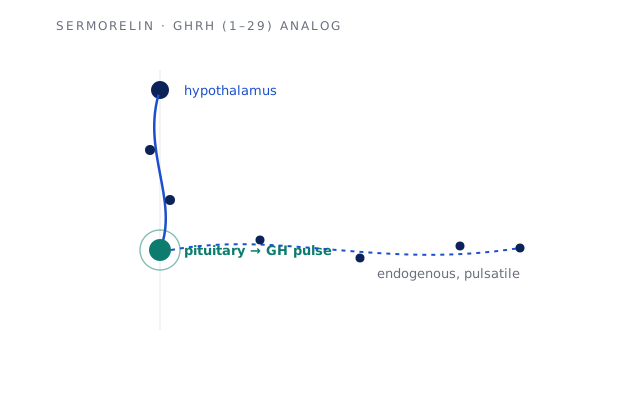
Sermorelin benefits: does it work? What the trials show
A real GHRH drug, read against the anti-aging pitch: an approved growth-hormone-releasing analog with a pediatric track record, and a longevity case built more on biomarkers than outcomes.
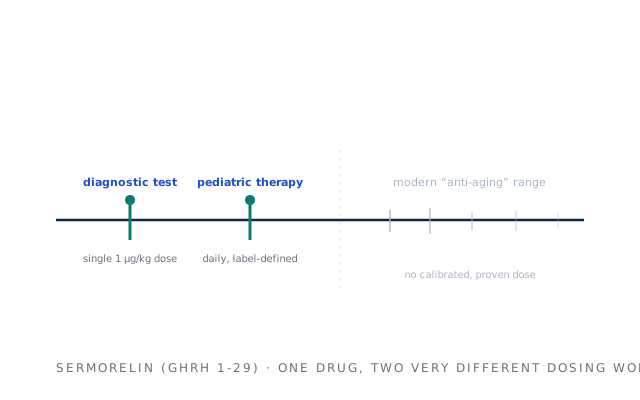
Sermorelin dosage: the clinical history vs. the modern anti-aging claim
Sermorelin once had real, label-defined dosing — a diagnostic test and pediatric GH therapy. The popular adult anti-aging dose has no outcome trials behind it.
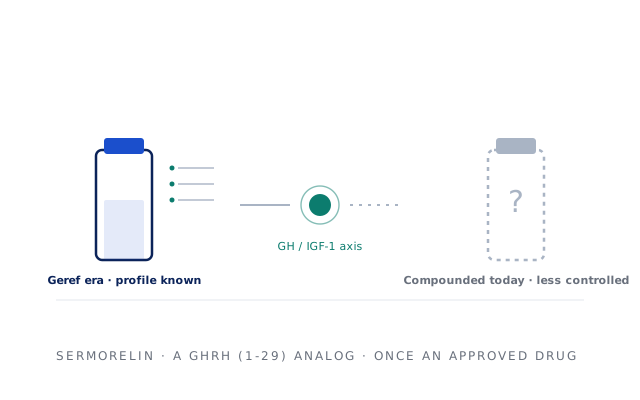
Sermorelin side effects: the approved-drug safety record vs. the compounded reality
Sermorelin was once an FDA-approved drug (Geref) with a well-documented, mostly mild side-effect profile. What changed isn't the molecule — it's the supply chain.
Sermorelin before and after: what the evidence actually shows
Sermorelin’s real, trial-documented “before and after” is faster growth in GH-deficient children. The dramatic adult transformation photos have no controlled outcome trials behind them.
Ipamorelin & CJC-1295: the honest evidence on GH secretagogue peptides
They reliably raise growth hormone, and that part is real. The muscle, fat-loss and anti-aging claims are not supported by human outcome data. A straight read.
Ipamorelin dosage: the microgram numbers people circulate vs. what's actually proven
Ipamorelin has no FDA-approved dose. We explain the pharmacology behind the figures (the saturation-dose idea, the empty-stomach and before-bed timing, the CJC-1295 stack) and why none of it is clinically validated.
CJC-1295 & ipamorelin dosage: the circulated numbers vs. what's actually proven
There's no FDA-approved dose for either peptide. We explain the pharmacology behind the microgram figures people circulate (the saturation-dose idea, the timing, the stack logic) and why none of it is clinically validated.
CJC-1295 + ipamorelin before and after: the honest results timeline
CJC-1295 reliably raises your own GH and IGF-1, a real biomarker. But the dramatic physique “before and after” has no controlled human trial behind it. Here’s the realistic week-by-week timeline.
Hexarelin: a potent GH peptide — with cortisol, prolactin and desensitization in the fine print
Hexarelin is one of the most potent GH secretagogues studied — that part is real. But unlike the selective ipamorelin it also raises cortisol and prolactin, its GH effect fades with repeated use, and it’s unapproved, gray-market, WADA-banned material. A straight read.
Tesamorelin (Egrifta): what it's actually FDA-approved for, and the evidence
A real, approved GHRH analog — for HIV-associated lipodystrophy specifically. What the pivotal trials showed, and why the longevity use is an extrapolation.
Tesamorelin dosage: the FDA-approved 2 mg dose vs. the off-label frontier
Tesamorelin (Egrifta) has one approved dose — 2 mg subcutaneous once daily for HIV-associated lipodystrophy. Its off-label anti-aging and fat-loss uses have no established dose.
Tesamorelin (Egrifta) side effects: the documented, label-monitored profile
Tesamorelin is FDA-approved, so it has a real side-effect record: injection-site reactions, joint and muscle pain, edema, plus mechanism-based IGF-1 and glucose monitoring.
Tesamorelin before and after: the honest results timeline
Tesamorelin’s one trial-proven result is less visceral abdominal fat, measured over ~3–6 months — not muscle, not a leaner mirror, and not the dramatic physique photos being sold.
Tesamorelin vs sermorelin: two GHRH analogs, very different status
Both stimulate your own growth hormone. Only tesamorelin is FDA-approved (HIV visceral fat); sermorelin is the shorter, now-compounded option. Neither is proven anti-aging.
Ipamorelin vs sermorelin: two receptors, one growth-hormone pulse
They both raise your own growth hormone, but sermorelin pulls the GHRH-receptor lever and ipamorelin the ghrelin-receptor one. That receptor split explains the selectivity, the stacking, and which fits which goal.
Tesamorelin vs ipamorelin: an approved drug versus a research peptide
Different receptors, very different evidence. Tesamorelin is FDA-approved with randomized-trial data for HIV visceral fat; ipamorelin is a research-grade GH secretagogue with mechanism support only. An honest, evidence-weighted comparison.
Tesamorelin for bodybuilding: what the evidence does — and doesn't — show
It reliably cuts HIV-associated visceral fat and raises IGF-1 — that's real, and FDA-approved. But there are zero trials of tesamorelin for muscle or physique in healthy people.
MK-677 (ibutamoren): raises the hormones, not (yet) the outcomes
An oral ghrelin mimetic that reliably lifts GH, IGF-1 and lean mass in human trials — but the same trials found no gain in strength, function or cognition, plus real metabolic and cardiac safety signals.
MK-677 dosage: what the trials actually used
Nearly every human trial used 25 mg once daily, oral — the dose that lifts GH and IGF-1 into the young-adult range over about a month. But there's no FDA-approved dose, and the product is unregulated.
MK-677 side effects: the blood-sugar problem and a cardiac flag
Beyond the appetite and water retention, MK-677 consistently raises fasting glucose and reduces insulin sensitivity — and a hip-fracture trial was stopped early for a heart-failure signal.
MK-677 vs sermorelin: oral secretagogue or injectable GHRH analog?
Both raise GH and IGF-1, but by different pathways. Sermorelin is an approved (now compounded) GHRH analog; MK-677 is a never-approved oral pill with clearer metabolic and cardiac flags.
Peptides for muscle growth: what the evidence shows for each one
An evidence ranking, not a shopping list. GH secretagogues move a biomarker; BPC-157 and TB-500 are animal-only; IGF-1 LR3 and follistatin are untested and WADA-banned. The molecule with real muscle data is testosterone, and it isn’t a peptide.
Best peptides for muscle growth you can get prescribed (2026)
Which muscle peptides a U.S. clinician can prescribe and a licensed pharmacy can fill, what they cost, where each stands with the FDA and WADA, and where you can lawfully buy them.
IGF-1 LR3: a real anabolic hormone, engineered to last — and untested in people
IGF-1 is a genuine anabolic hormone and “Long R3” is engineered to dodge its binding proteins so it lasts far longer. But there are zero human muscle-building trials — and the risks (hypoglycemia, the growth-factor/cancer concern, a WADA ban) follow straight from the biology.
Hexarelin dosage: the studied doses, and why there's no safe standing protocol
Human studies used small weight-based hexarelin doses — roughly 1–2 µg/kg IV and 1.5–3 µg/kg SC — as one-off GH probes. But its GH effect desensitizes with continued use, it raises cortisol and prolactin, and it's an unapproved, unregulated drug. There is no sanctioned dose.
Hexarelin side effects: the cortisol, prolactin and desensitization problems
Hexarelin's distinguishing side effects aren't a longer list — they're being non-selective (it raises cortisol and prolactin, unlike ipamorelin) and self-limiting (the GH effect fades with repeated dosing), plus the usual GH-axis complaints and a cardiac-receptor note. A straight read.
IGF-1 LR3 dosage: there is no validated human dose — and why that matters
No regulator, label, or trial has ever set a dose for IGF-1 LR3. The microgram figures traded in bodybuilding circles are unvalidated folklore — and with an insulin-like, cancer-linked growth hormone, a wrong dose is genuinely dangerous, not just ineffective.
IGF-1 LR3 side effects: hypoglycemia, overgrowth, and the cancer concern
IGF-1 LR3 is one of the riskier peptides, and its side effects come straight from the biology: insulin-like hypoglycemia, acromegaly-style overgrowth, and the proliferation concern of chronically elevating a systemic growth factor — all amplified by the long-acting design.
Hexarelin vs ipamorelin: stronger but dirtier vs cleaner but milder
Two GHRPs, one receptor. Hexarelin is the more potent GH releaser but raises cortisol and prolactin and desensitizes with use; ipamorelin is the selective, sustainable 'clean' choice. Here is why the milder peptide won.
Ipamorelin vs HGH: the hormone, or a request for the hormone?
HGH is recombinant growth hormone injected from outside; ipamorelin only asks your own pituitary to release its own. That exogenous-vs-endogenous split explains the potency gap, the risk profile, and why neither is an anti-aging answer.
MK-677 vs HGH: can an oral pill replace injectable growth hormone?
MK-677 prompts your own pituitary to release more GH; HGH is the injected hormone itself. One is a never-approved research chemical, the other an approved medicine — and neither has proven anti-aging benefit.
Growth Hormone Secretagogues: GHRH Analogs vs GHRPs Explained
The umbrella category that makes your own pituitary release more GH — split into GHRH analogs and ghrelin-receptor GHRPs, why they're combined, and where the evidence stops.
Do growth hormone peptides affect libido? Sermorelin, ipamorelin and MK-677
The honest chain from a GH peptide to your sex drive runs through sleep, energy, and mood — an indirect effect at best, not a libido or erectile-dysfunction treatment.
Ipamorelin side effects: mild on paper, thin on data, and a gray-market catch
Its one randomized trial showed no excess adverse events, but the human safety record is thin, FDA flags a serious IV report, GH-axis concerns are real, and most supply is unapproved and gray-market.
CJC-1295 side effects: what's measured, what's inferred, and the DAC concern
Injection-site reactions and flushing are the commonly reported effects; fluid retention, carpal-tunnel-like tingling, and glucose changes are inferred from GH excess. The DAC's real signature is a raised, non-pulsatile GH trough.
GHRP-2: a real GH secretagogue, marketed for things it hasn't been shown to do
GHRP-2 (pralmorelin) genuinely raises growth hormone and is an approved diagnostic agent in Japan — but the same dose lifts cortisol, ACTH and prolactin, drives appetite, and desensitizes with daily use. A straight read of the human data behind the anti-aging marketing.
GHRP-6: the 'hunger' growth-hormone secretagogue, and what the evidence shows
GHRP-6 is a first-generation ghrelin-receptor agonist that pulses growth hormone — but its most reliable real-world effect is a strong, dose-dependent surge in appetite. Real short-term GH pharmacology, preclinical cytoprotection, no long-term human outcomes, and not FDA-approved.
GHRP-1: the original GH secretagogue, and why a real GH pulse still isn't proof
GHRP-1 is one of the earliest synthetic growth-hormone-releasing peptides and the forerunner of GHRP-2 and GHRP-6. A single dose genuinely releases growth hormone — but that pulse is a short-term surrogate marker, not an outcome, and there are no long-term human trials behind its anti-aging marketing.
Follistatin: an elegant muscle mechanism, proven mostly in mice and gene therapy
Follistatin neutralizes myostatin, the body's brake on muscle — and the growth data are real. But they come from mice, monkeys, and gene therapy, not from the injectable 'follistatin-344' peptide sold online, which has no controlled human efficacy trials.
Mechano Growth Factor (MGF): real repair biology, no human proof for the injectable
MGF is IGF-1Ec — a splice variant your muscle makes after loading, and a genuine satellite-cell signal in cell and animal models. But the human data is about your own gene switching on with exercise, not about injecting PEG-MGF, which has no human outcome trials at all.
IGF-1 DES(1,3): a more potent, truncated IGF-1 — untested in people
DES(1,3) IGF-1 is IGF-1 with its first three amino acids clipped off — a naturally occurring, more potent variant that escapes the binding proteins holding IGF-1 in reserve. It's real biology, but there are zero human muscle-building trials, and the risks (hypoglycemia, the growth-factor/cancer concern, a WADA ban) follow straight from the molecule.
Metabolic & weight
Peptides and small molecules marketed for fat loss — and what the evidence actually supports.
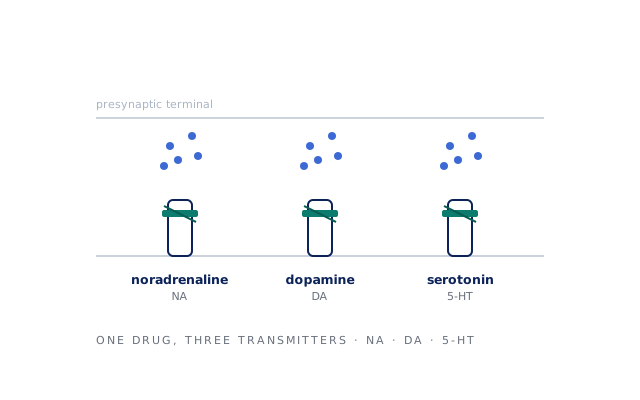
Tesofensine: the striking weight-loss number with a big asterisk
A triple monoamine reuptake inhibitor repurposed from a failed Alzheimer's drug. Its ~9.2% Phase II weight loss is real but flagged — a Lancet Expression of Concern, a completed Mexico Phase III that was never peer-reviewed or turned into approval, and still no FDA approval.
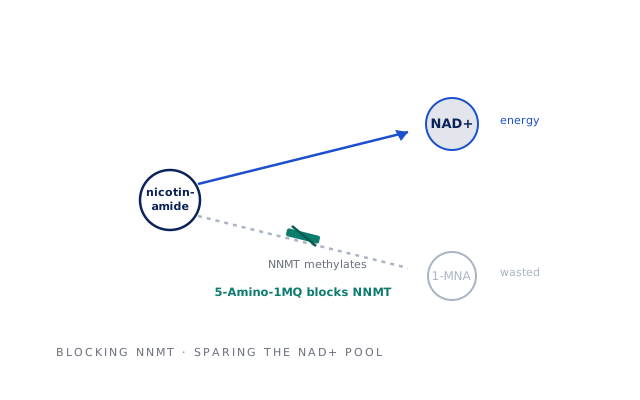
5-Amino-1MQ: an elegant mechanism with no human trials
An NNMT inhibitor that reverses obesity in mice by sparing the NAD+ pool — without reducing food intake. The mechanism is plausible; the human evidence is nonexistent.
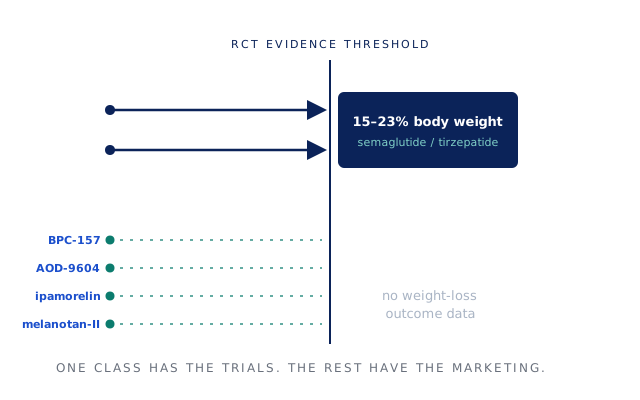
Peptides for weight loss: which ones actually work?
Only one class of peptides has real weight-loss trials behind it — the GLP-1 and incretin drugs. BPC-157, AOD-9604, the GH secretagogues and the rest are sold on mechanism, not outcomes. An evidence-first sort.
Adipotide: the “fat-targeting” peptide that worked in monkeys — and damaged their kidneys
Adipotide (FTPP / a prohibitin-targeting peptide) destroyed white fat’s blood supply and caused rapid weight loss in obese rhesus monkeys — but the same study found dose-dependent kidney toxicity, and it never reached approved human use. The honest evidence, and the gray-market caveat.
HGH Fragment 176-191: the GH “fat-loss fragment,” read against the trial that failed
It’s the C-terminal tail of growth hormone, sold as the part that burns fat. The honest anchor: its developed cousin AOD-9604 reached human obesity trials and failed to beat placebo — and the raw fragment sold today has no human trials at all.
AOD-9604: the “anti-obesity drug” peptide that failed its own trials
A synthetic growth-hormone tail fragment built to burn fat. Its mechanism is real and its safety was clean — but the pivotal human obesity trial showed no significant weight loss versus placebo, and the program was discontinued.
AOD-9604 dosage: what's used, and why the number is borrowed
AOD-9604 has no approved label and no validated dose — the ~300 mcg/day figure circulated online is borrowed from a clinical program that was discontinued after it failed to beat placebo.
5-Amino-1MQ dosage: why there is no validated human dose
5-Amino-1MQ has no human trials, so no established human dose exists. The only real numbers are rodent mg/kg figures that don't convert to people — the route is oral, but the amount is a question mark.
HGH Fragment 176-191 dosage: why there's no validated dose to give
The microgram amounts circulated for HGH Fragment 176-191 are community conventions, not validated figures — there are no human efficacy trials of the raw fragment, and the one rigorous test of the idea (AOD-9604) failed to beat placebo.
Cognitive, sleep & mood
Nootropic and neuro-active peptides — real human use in some, an under-tested evidence base in most.
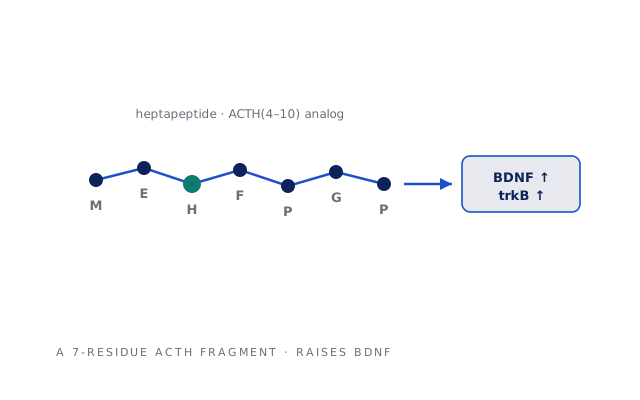
Semax: a real Russian nootropic with an under-tested evidence base
An ACTH(4-10)-derived heptapeptide that raises BDNF and is a registered drug in Russia. The mechanism is credible — but the human evidence is small, single-country, and mostly uncontrolled.
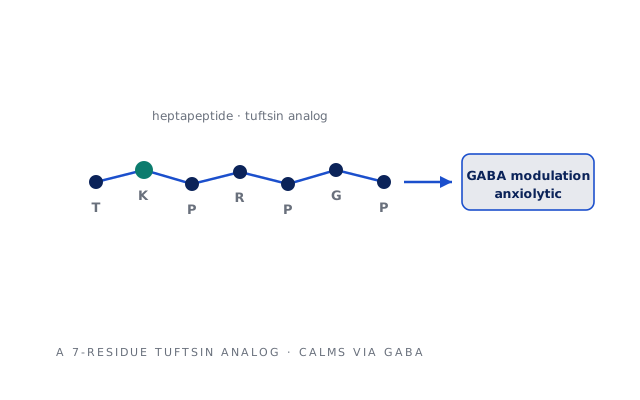
Selank: a non-benzodiazepine anxiolytic peptide, lightly tested
A tuftsin-analog heptapeptide that modulates GABA without being a benzodiazepine — and matched benzodiazepines in small Russian trials. The mechanism is credible; the evidence base is thin.
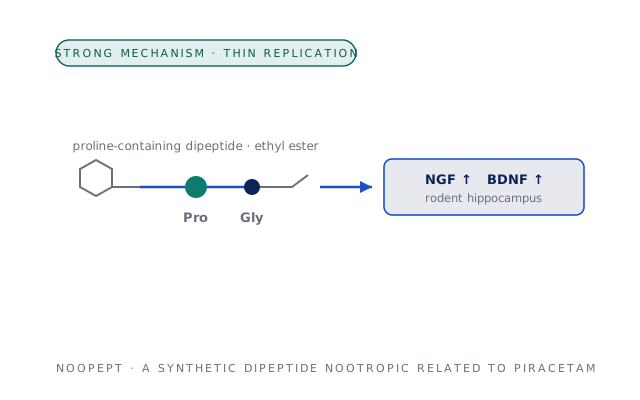
Noopept: a potent Russian dipeptide nootropic with a thin clinical base
A proline-containing dipeptide analog of piracetam that raises NGF and BDNF in animal studies and is a registered drug in Russia. The mechanism is credible — but the human evidence is small, single-country, and unreplicated to Western standards.
Selank dosage: the honest answer to “how much” for an unapproved peptide
There is no FDA-validated Selank dose. Here’s what the limited Russian literature and user practice actually report — an intranasal nasal spray, dosed in short courses — and why every number is a convention, not a prescription.
Selank side effects: well tolerated in small studies — but is it actually safe?
In the small, short Russian trials Selank was described as well tolerated, with mild effects (nasal irritation, occasional fatigue) and no benzodiazepine-style dependence. But thin, short-term evidence isn't proven long-term safety — and the gray-market supply is the real risk.
Dihexa: a striking preclinical nootropic with zero human evidence
An orally-active angiotensin-IV–derived compound famous for building synapses “more potently than BDNF” in the lab. The animal data are real — but there are no human trials, and its c-Met growth-pathway mechanism raises unanswered safety questions.
DSIP (delta sleep-inducing peptide): a famous name, an unresolved science
A naturally-occurring nonapeptide named for the delta brain-waves it produced in 1977 rabbits — yet half a century on, its gene, receptor and real human benefit remain unconfirmed. The honest, evidence-first read.
Semax dosage: the intranasal doses studied — and why none are FDA-approved
Semax is dosed intranasally and has real Russian clinical regimens, but no Western dosing standard. The stroke-trial doses, the modified acetyl-amidate form sold online, and community microdosing all carry different — and thin — levels of evidence.
Semax side effects: a quiet record, and a much larger unknown
Semax is reported as generally well tolerated in short Russian studies, with local nasal irritation the most likely everyday effect. But it is unapproved, its BDNF mechanism raises long-term questions no trial has answered, and unregulated supply adds its own risk.
Dihexa dosage: why there is no established human dose
Dihexa has never been through a human clinical trial, so no dose has ever been validated for people. The only real numbers come from rodent mg/kg studies — and the microdoses circulated online are untested self-experimentation, not protocol.
Dihexa side effects: unknown in humans, not proven safe
There are no human trials of dihexa, so its side-effect profile in people is genuinely unknown — “no reported side effects” reflects absent study, not safety. The one concern worth taking seriously is mechanistic: it activates the HGF/c-Met growth pathway implicated in cancer.
DSIP dosage: why there is no validated protocol
DSIP has no FDA approval and no established dose. The only defined human doses come from small 1980s IV studies; the microgram figures online are gray-market convention. The honest, evidence-first read.
DSIP side effects: a thin old record, no modern safety dataset
Older studies reported few acute problems — mostly headaches — but that comes from small 1980s work on a molecule whose biology is still unresolved. Why DSIP's safety in modern use is genuinely unestablished.
How to Increase Deep Sleep: What the Evidence Actually Shows
Deep (slow-wave) sleep is front-loaded into the early night and drives your biggest growth-hormone pulse — here are the levers that actually raise it, and an honest look at where peptides fall short.
Peptides for sleep: what actually has human evidence (and what doesn't)
DSIP, the GH-axis peptides and Selank all get marketed for sleep. Graded against controlled human data, none is an evidence-based sleep therapy — and the proven levers aren't injectable.
Peptides for anxiety: Selank, Semax and DSIP graded by real human evidence
Three peptides dominate the “peptides for anxiety” lists. Only one has meaningful human anxiety data — and none is approved or backed by large Western trials. A straight read.
Hormonal & sexual health
Peptides acting on the reproductive and sexual-response axes.
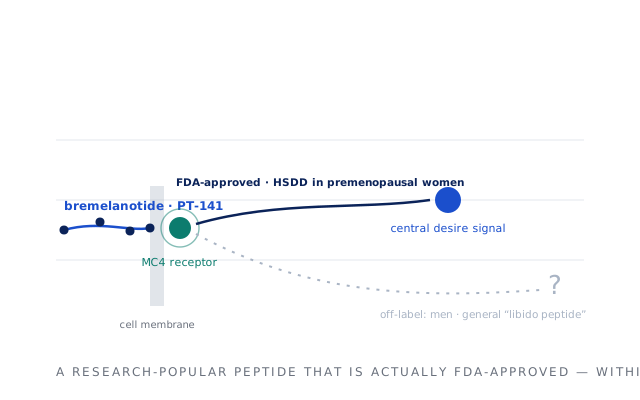
PT-141 (bremelanotide): the evidence on a peptide that is actually FDA-approved
Bremelanotide (Vyleesi) is FDA-approved for HSDD in premenopausal women, with phase-3 trial evidence. A straight read of what's proven — and where off-label use goes beyond it.
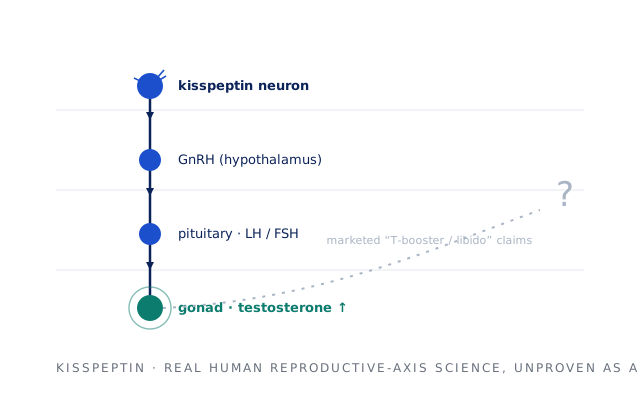
Kisspeptin: real reproductive-axis science, unproven as a sold therapy
A genuine human hormone atop the testosterone axis, with serious early human research — but the marketed libido and T-booster products are off-label extrapolations at unestablished doses.
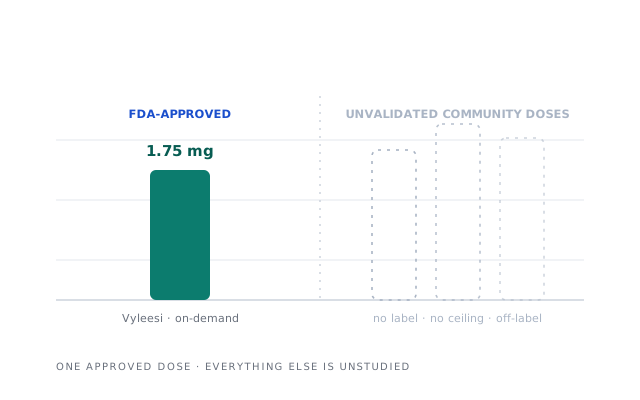
PT-141 (bremelanotide) dosage: the one approved dose vs community use
PT-141 is unusual — it has a real FDA-approved dose as Vyleesi: 1.75 mg subcutaneous, on demand, capped per day and per month. A precise read of that dose, and why off-label community dosing is unstudied.
PT-141 (bremelanotide) side effects: nausea, and a blood-pressure flag
Because PT-141 is FDA-approved as Vyleesi, its side effects are documented in real trials: nausea dominates, with a transient blood-pressure rise and possible skin darkening as the flags that matter — and off-label dosing amplifies all three.
Kisspeptin dosage: research infusions, not a home-injection protocol
Kisspeptin was dosed in humans only as a clinician-delivered, weight-based IV infusion or supervised bolus in research — there is no validated at-home dose, route, or schedule, and the marketed vial has none behind it.
Melanotan II and Libido: The Erection Side Effect That Became a Drug
Melanotan II was built to tan skin — but its accidental effect on erections and desire, acting centrally via MC4R, is why the FDA-approved libido drug bremelanotide (PT-141) exists.
Kisspeptin and Libido: What the Brain-Imaging Trials Actually Found
Imperial College fMRI trials show kisspeptin enhances the brain's sexual-processing activity — a plausible, promising target, but early brain-imaging data, not a proven libido therapy.
BPC-157 and Erectile Dysfunction: Separating the Claims from the Evidence
BPC 157 is marketed for 'blood flow' and, by extension, erections, but the entire claim rests on animal mechanism with zero human sexual-function data.
Oxytocin: real science, oversold claims
The 'bonding hormone' has a huge human literature — and its most famous findings largely failed to replicate. A straight read of where the evidence stands.
Skin, pigment & cosmetic
Peptides acting on skin — from copper-peptide dermatology to the melanocortin tanning injectables.
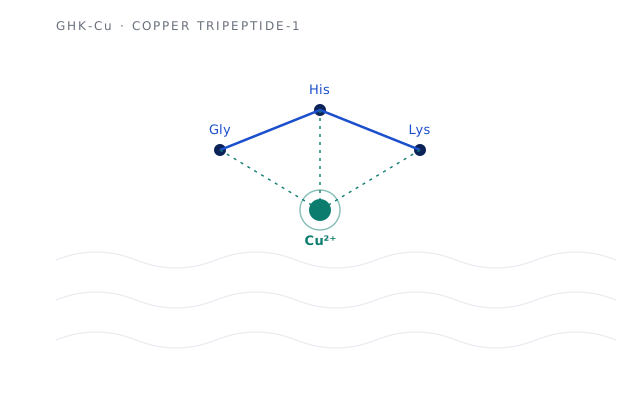
GHK-Cu: the copper peptide between real skincare and overclaim
A decades-deep molecule with a credible topical story — and systemic anti-aging claims that outrun the human data.
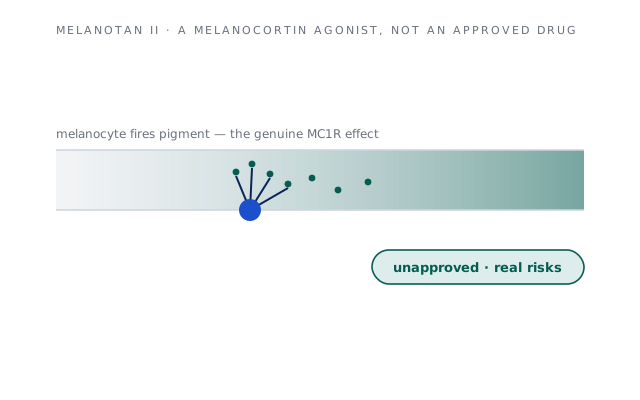
Melanotan II (MT-2): a real skin-darkening drug with real, unapproved risks
MT-2 genuinely tans skin via the melanocortin-1 receptor — but it’s an unapproved gray-market injectable with a documented harm record, from priapism to changing moles. And it’s not the approved drug afamelanotide.
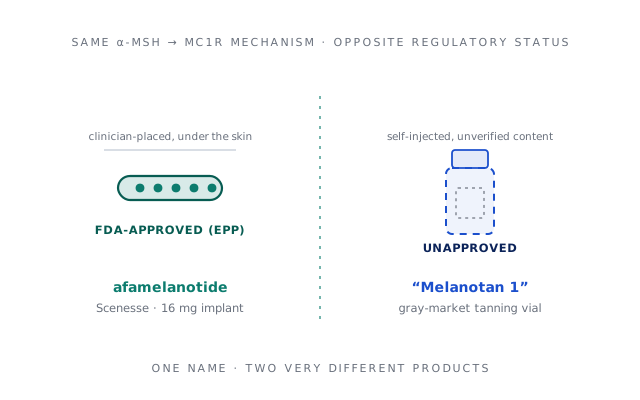
Melanotan I (afamelanotide): an approved rare-disease drug, not a tanning peptide
As afamelanotide (Scenesse), Melanotan I is a real FDA-approved MC1R agonist with Phase 3 evidence — but only for the rare disease EPP. The injectable “Melanotan 1” sold online for tanning is a different, unregulated, unproven thing.
Argireline: what the evidence says about “Botox in a bottle”
Acetyl hexapeptide-8 borrows botulinum toxin’s SNAP-25 target to soften expression lines topically — the mechanism is real, the human effect is modest, and it is not an injection.
Matrixyl: what the evidence says about the “collagen-boosting” peptide
Palmitoyl pentapeptide-4 (pal-KTTKS) is a collagen fragment that signals fibroblasts to make more matrix — the mechanism is real, the topical trials are small and modest, and it sits beside retinoids, not above them.
Collagen peptides: the honest evidence on skin, joints, and what you actually absorb
The most-consumed peptide on earth has a real but modest RCT record for skin and joints — and a mechanism that isn't "eat collagen, become collagen."
Melanotan 1 vs Melanotan 2: an approved drug versus a gray-market injectable
They aren’t two doses of one peptide. Melanotan I became afamelanotide (Scenesse), an FDA-approved implant for the rare disease EPP. Melanotan II is the unapproved cosmetic injectable — broader at the receptor level, with documented harms.
GHK-Cu dosage: topical concentrations versus the unvalidated injection
The copper peptide has real, defined dosing as a topical cosmetic — and no validated dose, scant human data, and a copper-overload risk when injected. Route decides everything.
GHK-Cu side effects: why route is the whole story
Topical copper-peptide creams are generally well tolerated — but injected GHK-Cu has no human safety data and a real concern the skincare evidence never raises: copper overload.
Melanotan II dosage: there is no safe dose, and here’s why
MT-2 has no approved or established safe dose — no regulator licenses it. The microgram protocols people share are folklore attached to an unverified powder, and the harms rise with the amount injected.
Melanotan II side effects: the mole problem, priapism and serious rare events
MT-2 has the most-documented harm record of any peptide here — nausea and flushing at the mild end, darkening and new moles that mask melanoma surveillance in the middle, and priapism, renal infarction and PRES at the dangerous end. Regulators warn against it.
Peptides for hair growth: what the copper-peptide evidence actually shows
GHK-Cu has a plausible follicle mechanism and some lab data — but nothing rivaling minoxidil or finasteride. A straight read of the hair evidence, and the biotin and GLP-1 confusions around it.
Peptides for skin: which cosmetic peptides actually have evidence
Topical skin peptides have the best consumer evidence of any peptide category. A graded, evidence-first read on GHK-Cu, Matrixyl and argireline — and realistic expectations.
Access, cost & safety
What peptide therapy costs, where to get it legitimately, and how to avoid the gray market.
How much do peptides cost? Peptide therapy prices in 2026
The four routes to peptide therapy, and what your money actually buys: most of it is compounded sermorelin at ~$150–$250/month via telehealth, while approved peptide drugs, clinic programs and gray-market powders each price differently.
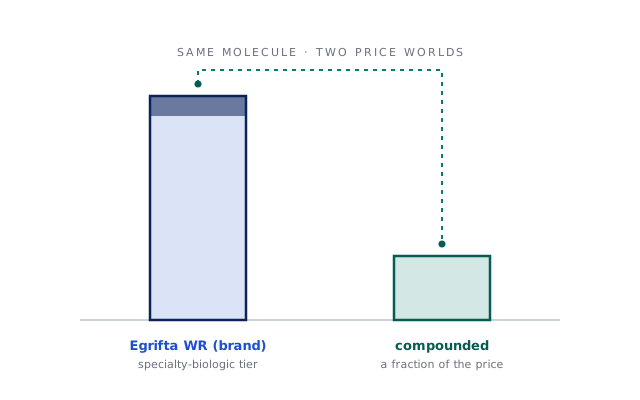
Tesamorelin cost in 2026: brand Egrifta vs compounded, and why the gap is so big
Brand Egrifta (now Egrifta WR) is a specialty biologic (thousands/mo, via insurance); compounded tesamorelin starts around $300/month off-label. Here’s the honest cost-by-route breakdown, and why the same molecule has two prices.
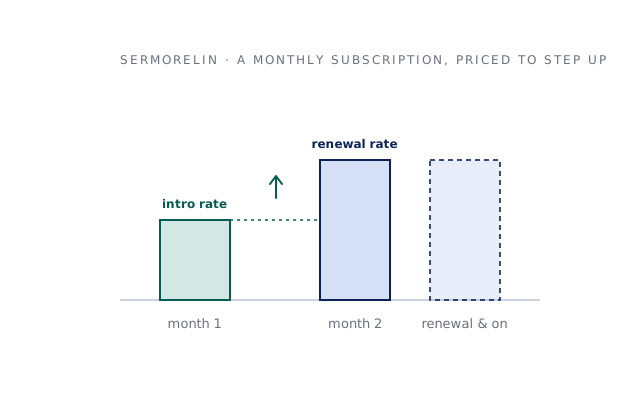
Sermorelin cost in 2026: real per-month pricing and the intro-vs-renewal trap
Compounded sermorelin is cash-pay and sold by subscription, roughly $150–$250/month month-to-month, less on longer plans. Here’s a provider-by-provider price comparison, injection vs oral, and how to read a plan on a true per-month basis.
How much does BPC 157 cost? The price is really a regulatory story
BPC 157 isn’t FDA-approved, and years on the FDA’s Category 2 compounding list pushed it into the “research use only” gray market. Here’s what it actually costs by route, and why the cheapest vial hides an unpriced risk.
CJC-1295 & ipamorelin cost in 2026: what the blend actually costs per month
CJC-1295 and ipamorelin are sold as one combined blend, so the price you’re comparing is a bundle. Here’s the honest per-month breakdown (telehealth vs. clinic vs. gray-market), anchored to the evidence.
MK-677 cost in 2026: why the cheap oral research chemical isn’t actually cheap
MK-677 (ibutamoren) is an oral capsule or dropper, not an injectable, and it has no clean pharmacy route. The sticker looks low (about $60 for a month's liquid at one seller), but it prices the powder, not the purity, the prescriber, or the legal status.
GHK-Cu cost in 2026: one copper peptide, two completely different price worlds
GHK-Cu is sold both as a $30–$60 topical skincare serum and as a far pricier injectable “research” vial: the same molecule, two markets, two risk profiles. Here’s what each price actually buys, anchored to the evidence.
PT-141 cost in 2026: approved Vyleesi vs the compounded market
PT-141 has two prices: the FDA-approved Vyleesi autoinjector ($99 per four-dose box without coverage, HSDD only) and the off-label compounded spray or injection at about $150–$250 a month. Here’s what each one buys.
How to reconstitute peptides: the process, the math, and the honest caveat
Reconstitution is just dissolving a freeze-dried peptide back into bacteriostatic water — and the concentration is one division (mg ÷ mL). Here is how the process and the math actually work, why this is a clinician's job, and why precise arithmetic on an unverified gray-market powder still tells you nothing.
How to Inject Peptides Subcutaneously: A Careful, Evidence-Based Walkthrough
The subcutaneous self-injection technique itself — supplies, site rotation, aseptic steps, and sharps disposal — framed as harm-reduction, not medical advice.
How to Cycle Peptides: What the Pharmacology Actually Supports
Most peptide “cycles” are forum convention, not trial data—here is where the real receptor biology ends and the bro-science begins.
How to store peptides: fridge temperature, shelf life and stability
Why lyophilized powder, refrigerated solution, and the enemies of stability decide whether your peptide is still the molecule you paid for, plus how long compounded and branded GLP-1s last in the fridge.
Where to get peptides safely: the three routes, ranked by oversight
There are three real ways to obtain a peptide in 2026 — and they differ by one thing that matters: oversight. Here is how FDA-approved drugs, licensed compounding (503A/503B), and the 'research use only' gray market actually compare.
Peptides vs SARMs: a structural class versus a single drug class
They get cross-shopped constantly, but they're not the same kind of thing. “Peptides” is a broad structural category with many targets; SARMs are one drug class acting on a single receptor — with liver and testosterone risks peptides don't share.
Bacteriostatic water for peptides: refrigeration, shelf life and use
Bacteriostatic water is sterile water plus 0.9% benzyl alcohol, the preservative that lets a multi-dose vial be entered for up to 28 days. Here is how it differs from sterile water and SWFI, how to store it, and its real cautions.
How to Read a Peptide Certificate of Analysis (COA)
HPLC purity, mass-spec identity, net peptide content, and the red flags — a buyer's guide to what a COA proves and what it can't.
Peptide injection sites: where subcutaneous shots go, and how to rotate them
Almost all research peptides and GLP-1s are injected subcutaneously — into the abdomen, outer thigh, back of the upper arm or upper buttock. A practical, harm-reduction guide to the sites, why you rotate them, and sterile-technique basics.
Tesofensine cost: why there is no legitimate price
Tesofensine is investigational and not FDA-approved, so it has no retail or pharmacy price. The only numbers that circulate come from the gray market — unregulated, untested, and not legal to use as a drug. Here is the sober reality, and the approved alternatives you can actually price.
The best collagen peptides: an evidence-first buyer's guide
No fake product rankings — just the verifiable criteria that separate good hydrolyzed collagen from bad: the right type, the studied dose, third-party heavy-metal testing, source and a clean label. Plus an honest read on what the trials actually show.
More in Peptides
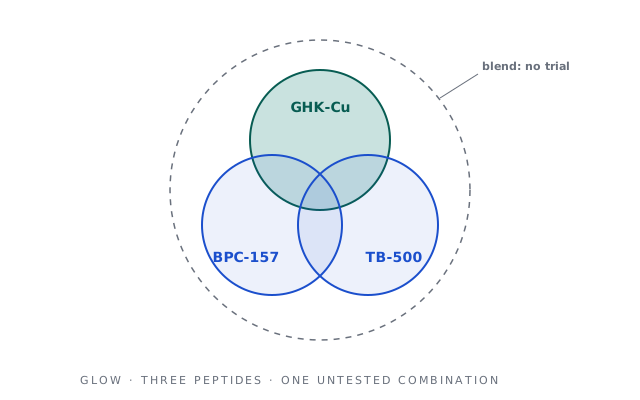
Glow peptide blend: what's in it, the evidence, and the FDA catch
Glow combines GHK-Cu, BPC-157 and TB-500 in one compounded injection. Only GHK-Cu has human skin data, mostly topical. No trial has tested the blend, and none of its ingredients is FDA-approved.
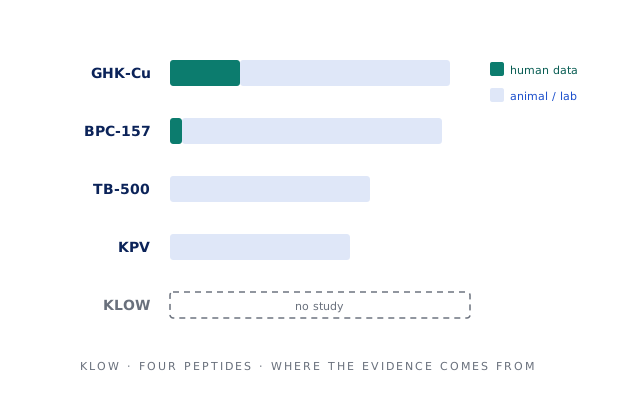
KLOW peptide blend: four peptides, the evidence for each, and the gaps
KLOW adds KPV to the Glow blend of GHK-Cu, BPC-157 and TB-500. Each ingredient has animal or lab data, only GHK-Cu has human skin data, and no trial has tested KLOW itself.
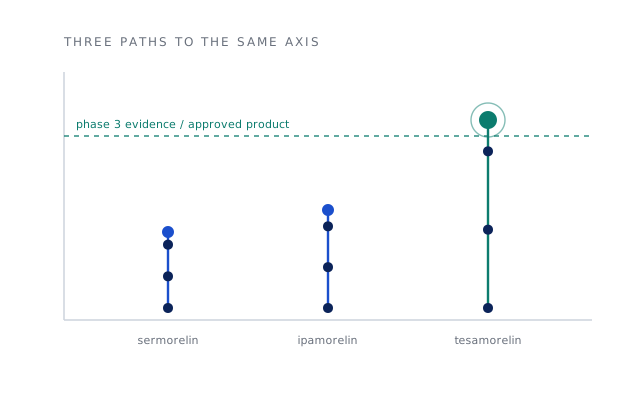
Sermorelin vs ipamorelin vs tesamorelin: mechanism, evidence and approval status
Two are GHRH analogs, one is a ghrelin-receptor agonist, and only one has phase 3 trials behind it — with an approval far narrower than the way it is sold.
P21 (P021): a neurogenic peptide with real animal data and no human evidence
Marketed as “P21,” the compound is really P021 — a CNTF-derived peptide that boosts neurogenesis in rodents. There are no human trials, no approval, and a genuinely muddled name. A straight read of where the science stands.